


Elizabeth Woolsey - An Interview

A Matter Of Time is the first instalment of the Travels of Dr. Rebecca Harper five-part series. It follows the journey of a horse doctor as she encounters a new practice and then finds herself with a gateway to the past, and is soon walking around in 1857!
Open Shelf caught up with author Elizabeth Woolsey to find out more.
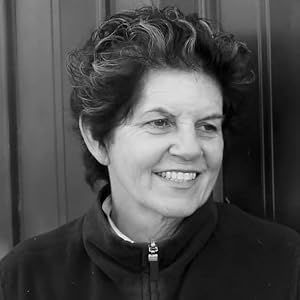
I’ve always enjoyed anything that plays with time. From Doctor Who to Timeline, or Quantum Leap to Time Trap. That meant the premise at the heart of the story was immediately intriguing. Then it's coupled with the Great Outdoors and immersed in a Western setting. But where did Elizabeth draw her inspiration from?
“The Short answer: Bonanza.
Long answer: I was raised in the 50s and 60s when I watched television westerns which still played daily on Australian TV!! How retro, but it hooked me in again, and I think it was the colour version that attracted me. Colour!!!
I’m a pantser and began Rebecca’s 1800s adventure with television characters of the TV series Bonanza. I thought she would travel there and move on, but it wasn’t until later in the book I decided she should move back to that area. The copyright holder was nice, but it dragged on for two years, and I gave up.”
Rebecca Harper is of course a recently qualified horse vet as the story starts and it feels very true to life, no doubt drawing on Elizabeth’s first career in the same job. So how much did she lean on her first-hand knowledge to develop the character?
“I graduated at the same time Rebecca did, and so I knew what she would know back then. Many diagnostic tools, treatments, and anaesthetics were essential to a modern graduate, but not in the 1800s.”
That gives us the realism but it’s a different matter actually projecting that onto the page. From the start Rebecca’s voice feels incredibly vivid, so how do you develop such a strong narrative style?
“It was my first fiction novel, and from the start I had Rebecca speaking and acting like a real person (me). My early drafts did not change from what you’ve read. My beta readers said it was like I was talking to them, so I’ve never changed.”
It’s a good lesson, a great example of writing what you know. I’ve always felt that dialogue can be improved just by reading it out loud. But writing what you know can leave an author bogged down in the details. How did Elizabeth keep that balance, keeping the veterinary details feeling authentic without slowing the story. How did she balance realism with pacing?
“I had so many plots and subplots that I didn’t linger on anything or anyone. Rebecca’s primary goal was to find a way back to her modern life. Along the way she had to survive and seek a way back. At the same time, she’s mesmerised by the “TV” characters of her childhood.”
Breaking from the veterinary details, the rockslide and survival sequence is intense and visceral. What was it like to write that scene?
“I imagined myself in that scene and what I would do. I tried to make it as real as if it was me. I was lost in the woods about twenty years ago, and I remembered the panic I felt when I thought I would have to spend a night alone in the woods. I could never imagine starting a fire without matches; I mean sheesh…”

The historical setting of 1857 is an era rich with so much history, as frontiers continued to be conquered, more discoveries were made, and the sides that would fight the Civil War were jostling. Why did you choose 1857 as the historical period Rebecca falls into?
“The entire first two books were written while I negotiated with the copyright owners of Bonanza. I wanted it to fit with known historical dates such as the gold rush, and the subsequent silver rush in Nevada, and then the Civil War and the times Bonanza was supposed to be showcasing. Rebecca arrives when the boys are young. I had to time it so Rebecca disappeared as the television show began. Rebecca is not in the series so she had to move away. Of course, then the use of the name and characters of Bonanza were all changed, and the mythical television series became Comstock.”
It’s one thing playing with fictional characters and settings, but another to bring your own fiction into contact with real people, especially those that are very well-known. The book features encounters with major historical figures so how did Elizabeth approach writing them?
“I’ve written several papers on this topic. I didn’t want to change history by telling Lincoln not to attend the theatre where he was subsequently shot. Making changes that are too wide-reaching would change too many things. But playing around the edges is fun such as when Rebecca meets Mark Twain (Samuel Clemens) who did work in Virginia City in real life. She’d spent time in the San Francisco jail where it was cold. I was born and raised near San Francisco and was always cold when I went to the city. I have always remembered the phrase “Coldest winter … a summer in San Francisco…”
Funny, I was in San Francisco last year and it was lovely weather! But then it was May, so maybe it has that in common with Scotland. Warm spring, chilly summer!
An author rarely just writes and moves on. What themes or ideas does Elizabeth hope readers take away from A Matter of Time?
“Resilience, humour, making do. Happy memories of the 50-60s television era, strong women and a strong work ethic, and yet remembering that the good old times were not that good for Native Americans, Chinese cooks, and women. I try to temper Rebecca’s feelings about a woman’s place in the 1800s society with the knowledge she had about the future.”
That response is no surprise given that the very first answer was Bonanza which, across its 431 episodes, was a real ground breaker for covering tough issues of both the past and the time of production (episodes such as Enter Thomas Bowers and Day Of Reckoning immediately springing to mind.)
Let’s get into the element that really piques my interest. How did Elizabeth balance the memoir‑like realism with the speculative time‑slip elements?
“Not sure this answers your question, but Rebecca meets a wealthy family that she knows to be her very distant relatives based on a picture in her family home. The Merritts were real people and were, in fact, my great-great grandparents. (Pantser moment) - I didn’t plan it. I have pictures and know they existed although the timing is not perfect. I didn’t plan for her to meet them until it happened. Pure chance.”
Who doesn’t love a slice of serendipity?
Writing a book is, as anyone that has tried knows, a challenge. Often the premise is the easy bit – balancing the story, keeping to the themes you want to explore, making it realistic but readable, are just some of the challenges. What did Elizabeth see as the challenges?
“Deciding if she would return to the future and stay, and how to end the book.
When people and animals die. You’ll have to read the book to see who. It was hard to leave their character’s voices.
Finding the time to write while I worked as a full-time vet and had hospitalised horses most nights that required my time.”
I think anyone juggling the “real world” with their writing can definitely recognise the last point. But surely it’s all been worth it? What has been the most rewarding part of bringing Rebecca’s story to life?
“There is a pre-teen girl who lives in the Australian outback. She is educated with School of the Airways to learn from a remote cattle station. One of my former clients is a huge fan. She took the book to the cattle station for the girl’s mother. The little girl read the book and used Rebecca Harper for her Australian Book Week character and dressed like Rebecca Harper, and told the remote class about the story. My comment was “I’ve arrived…” The book has won awards and had many accolades, but they pale in comparison.”
A personal story like that one does really mean more than anything else.
Let’s look beyond A Matter Of Time. Did Elizabeth always envision this story as the first in a five‑part series?

“I wrote four books in less than two years. I was done and moving on. My readers suggested otherwise, and a year ago I wrote a fifth book. I’m thinking about book six, but I have other projects going, and I will start a 6th book possibly this summer.”
Did we just get an exclusive reveal? Without giving spoilers, what can readers expect as Rebecca’s journey continues?
“She has a daughter in vet school. She has a vet school classmate who is the subject of a three-book series, and they may meet up.”
Returning to the broader sense of write what you know, how does Elizabeth’s experience living and working in both the USA and Australia influence the series?
“My life in Australia was pivotal. TV was limited, and the series Bonanza was played daily, which made me consider the Bonanza characters as the family she would initially meet. I had many older clients who had been stockmen and were perfect characters for the people Rebecca met. I also had to make time for writing, and I’d written many professional articles which were done in the early hours of the day. I’d never have done any of that in the USA. Writing in the early morning became my habit, and when I no longer had medical topics, I switched to fiction.”
The covers to the series have some evocative rider at sunset images. How did they come to be?

“I originally used a photograph of the woman standing on a rock fishing, with a horse standing behind her. It wasn’t just the picture, but the font that was widely rejected. An author wrote to me and suggested the current picture. I then found pictures for subsequent books. I am ready for an upgrade that might “hook” more readers. I know the covers of the Outlander books have had redo’s maybe I should too.”
Covers are always such an interesting topic, and a great example of the old adage that a picture paints a thousand words.
We had a look at the rest of Elizabeth’s catalogue and she has already touched on a three-part series that is linked to the equine veterinary world. But one non-fiction piece really stood out for us, Jack’s War.

“My stepson is a fighter jet pilot. He now teaches pilots. My father was a navigator in WWII and flew 35 missions from Hethel (UK) over Germany. He wrote letters to his parent every week, and his father, who was in WWI as a doctor on the front in France saved all the letters and put them in an album. My father wanted to talk to my stepson about the hardships of war. I took the letters when my father passed and transposed them for my family. A university prof saw them and suggested I publish the letters.”
As we draw to a close, fans of the series, and the rest of your work, will want to know what’s next. You’ve mentioned a book six to the series so what’s going to be next? Will the Dr. Rebecca Harper world be revisited beyond that? Anything else in planning?
“Yes, she will. I know where it ends, but not sure if it will be two or three books that will end the saga of Rebecca Harper’s travels. Remember, I’m a pantser….”
As we come to an end, returning to the book, if Rebecca could give one piece of advice to her 1981 self, what would it be?
“If you can’t be with the one you love, love the one you’re with. Never take Oreos and tampons for granted. Family can take many forms: even a Chinese cook.”
Thanks to Elizabeth for joining us to discuss A Matter Of Time, Dr. Rebecca Harper and more!
You can read more about Elizabeth and her work HERE.


Comments