


Karma Monroe - An Interview

Mad Love is a novel by Karma Monroe - we have just reviewed it, so Open Shelf took the opportunity to catch up with Karma and find out more.
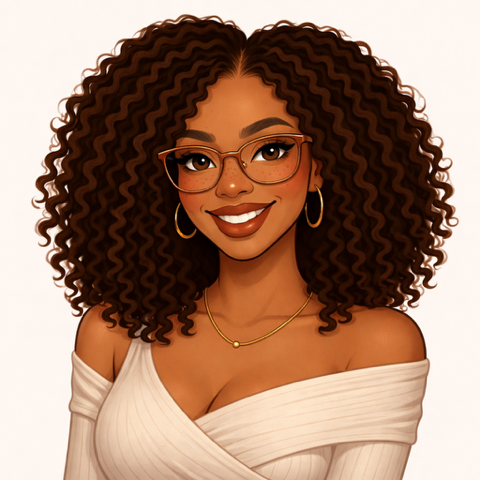
Let's start by looking at the origins of the story. What was the first spark of Mad Love - Harlee, August, or the situation that throws them back together?
The first spark was actually Harlee.
I knew I wanted to write a heroine who looked successful on paper but was quietly carrying the weight of trying to hold everything together. Harlee is ambitious, funny, capable, and fiercely independent, but she's also exhausted. Once I understood who she was, August arrived almost immediately. Not because she needed saving, but because I wanted to explore what happens when someone who is used to handling everything alone meets a person who genuinely wants to show up for her.
The situation that brings them back together came later. The emotional question was always the same: what happens when the life you've carefully planned collides with the life you secretly want?
Did you always envision this as a romance set against academic and career pressure, or did that develop later?
That was there from the beginning.
I've always been fascinated by the way ambition shapes our relationships. We spend so much time talking about career goals, promotions, degrees, and milestones, but not enough time talking about the emotional cost that can come with constantly striving.
For Harlee, academic and professional success became part of her identity. For August, building his company required sacrifices that shaped how he approached love and vulnerability. Their careers aren't just backdrops. They're part of the reason these characters make the choices they do.
How did the idea of “love that disrupts the plan” shape the story from the beginning?
I think some of the most interesting love stories happen when two people meet at exactly the wrong time.
Harlee has a plan. August has a plan. They're both convinced they know what success looks like and what they need to do to get there. The problem is that life rarely asks for permission before changing direction.
The idea behind Mad Love was never that love fixes everything. It's that love can challenge the stories we tell ourselves about who we have to be. Sometimes the disruption isn't the relationship itself. Sometimes it's realizing the life you've been building no longer fits the person you've become.
Let's take a closer look at Harlee. Her voice is sharp, intimate, and emotionally layered. How did you find her voice?
Harlee's voice came naturally because I grew up around women who sounded like her.
She's funny, observant, a little dramatic when she's comfortable, and capable of turning a serious moment into a joke before anyone realizes she's protecting herself. I wanted her narration to feel conversational, like she's letting readers sit beside her on the couch while she tells the story.
At the same time, I wanted there to be a gap between what Harlee says and what she's actually feeling. She's incredibly self-aware in some ways and completely avoidant in others. Finding that balance between humor and vulnerability was where her voice really clicked for me.
She’s ambitious but quietly overwhelmed - what drew you to writing a heroine in that emotional space?
Because I think a lot of people live there. Especially women. We're often praised for being capable, dependable, and resilient, but sometimes that praise becomes a trap. You become the person everyone can count on while quietly running on empty.
I wanted to write a heroine who wasn't falling apart dramatically. She's functioning. She's succeeding. She's checking all the boxes. But beneath that success is someone who isn't sure how much longer she can keep carrying everything alone.
I think that's a very real experience for a lot of people.
How much of Harlee’s cultural background and bilingual warmth was planned, and how much emerged naturally as you wrote?
A little of both. Her cultural identity was always important to me because culture shapes how we move through the world, how we communicate, and how we love. But I never wanted it to feel performative or reduced to a checklist.
A lot of the warmth emerged naturally through her relationships. The way she talks with family, the way she interacts with friends, the way humour and affection exist in the same sentence. Those moments felt authentic because they were grounded in character rather than trying to make a statement.
The goal was always to create someone who felt fully human first.
Let's look next at the other main character, August. He is both powerful and guarded. What was the key to writing him as more than the archetypal CEO love interest?
For me, the key was remembering that August is a person before he's a CEO. It's easy to write success. It's much harder to write the things success can't solve.
August built an incredible life for himself, but he still carries insecurities, regrets, and fears that money can't touch. He's confident in a boardroom and decisive in a crisis, but emotionally he's still figuring things out like everyone else. He loves deeply, feels things intensely, and sometimes struggles with vulnerability despite being incredibly emotionally intelligent.
I was far more interested in the man behind the accomplishments than the accomplishments themselves. The company matters, but the story is really about who August is when the title, the reputation, and the carefully curated image fall away.
How did you approach the dynamic of a man who built everything from nothing meeting a woman who’s terrified of losing everything she’s worked for?
What clicked for me is that they're actually motivated by the same fear.
On the surface, August and Harlee seem very different. August comes across as confident and established, while Harlee feels like she's constantly proving herself. But underneath that, both of them understand what it means to sacrifice for a dream.
August knows what it costs to build something from the ground up. Harlee knows what it feels like to believe one wrong move could make everything unravel.
Because of that, neither of them dismisses the other's ambition. They respect it. They recognize it. The conflict comes from the fact that they've built identities around achievement and control, so love feels risky. It introduces variables they can't manage, outcomes they can't predict, and emotions they can't spreadsheet their way through.
I think that's what makes their relationship compelling. They're not fighting each other. They're fighting the fear that choosing love might require them to redefine success.
What do you think Harlee brings out in him that no one else does?
Honesty. Not because she's trying to challenge him, but because she's one of the few people who isn't impressed by the version of Augustus James the world sees.
She doesn't care about the title. She doesn't care about the money. She doesn't treat him like a myth or a brand. She sees the person underneath all of it, sometimes before he's ready to be seen.
Harlee gives him permission to stop performing. To stop being the guy with all the answers. To be uncertain, vulnerable, frustrated, hopeful, jealous, messy, and human.
I think everyone deserves someone who can see beyond the image they've built and still choose them anyway. For August, Harlee is that person. She reminds him that being loved and being admired are not the same thing, and that's a lesson he desperately needed to learn.
The chemistry between Harlee and August is immediate but complicated. What makes their connection different from a typical second chance romance?
What makes their relationship different is that they're not trying to recreate the past.
A lot of second-chance romances focus on fixing what went wrong. Harlee and August aren't really doing that. They're reconnecting as completely different people than the ones who first crossed paths years ago.
The chemistry is immediate because the attraction was always there, but the complication comes from timing, maturity, and circumstance. They're carrying new responsibilities, new fears, and new versions of themselves into the relationship. In many ways, they're meeting each other for the first time.
What interested me most wasn't whether they could get back together. It was whether they could finally be honest enough with themselves to build something new.
How did you balance the tension between their professional boundaries and their emotional pull?
I treated both sides as equally valid. Their professional concerns aren't obstacles inserted to keep them apart. They're real. Harlee has worked incredibly hard to build a career she's proud of, and she's very aware of how quickly people's perceptions can change. August understands that too, perhaps better than anyone.
The tension comes from the fact that neither of them is wrong. Their concerns make sense. Their attraction makes sense. Their feelings make sense.
As a writer, I wasn't interested in creating artificial misunderstandings. I wanted the conflict to come from two intelligent adults trying to navigate a situation where there isn't an easy answer. The emotional pull is strong, but so is the desire to protect what they've spent years building.
That's where the tension lives for me: not in whether they want each other, but in what they're willing to risk to find out if it's worth it.
Was there a scene between them that surprised you as you wrote it?
The scenes that surprised me most weren't necessarily the romantic ones. They were the quieter moments.
There's something magical that happens when characters stop trying to impress each other and simply exist together. Some of my favorite scenes became the conversations, the teasing, the moments where they made each other laugh, or the moments where one of them saw straight through the other's defenses.
Those scenes often revealed more about their relationship than the grand romantic moments did. They reminded me that chemistry isn't just attraction. It's comfort. It's trust. It's feeling understood by someone when you weren't expecting to be.
What brings the story alive are the rich natural conversations. The dialogue feels incredibly alive. What’s your approach to writing conversations that feel real?
For me, dialogue starts with voice. Every character should want something from a conversation, even if it's as simple as avoiding a difficult topic or making someone laugh. Once I understand what each character wants, the dialogue becomes less about exchanging information and more about personality, conflict, rhythm, and subtext.
I also pay a lot of attention to how people actually communicate. We interrupt each other. We change subjects. We use humour when we're uncomfortable. We say one thing while meaning another. Real conversations are rarely neat, and I try to preserve some of that messiness on the page.
Most importantly, I want dialogue to sound like something a specific character would say, not something I as the author, want to say.
The book moves between humour and emotional weight seamlessly. How do you manage that tonal balance?
Honestly, that's how life feels to me. Some of the funniest moments happen in the middle of heartbreak. Some of the most vulnerable conversations happen right after someone says something ridiculous. Humour and emotion aren't opposites. They often happen at the same time.
Harlee in particular uses humour as both a personality trait and a defence mechanism. It's how she connects with people, but it's also how she protects herself when things get uncomfortable. Allowing her to be funny during emotional moments made her feel more authentic.
As a writer, I never try to separate the comedy from the emotional truth. If the characters are grounded, both can exist in the same scene. In fact, I think they make each other stronger. The humour makes the emotional moments hit harder, and the emotional moments give the humour meaning.
Let's now take a look at some of the themes in the story.
The story explores ambition, burnout, identity, and the pressure to succeed. What did you want readers to feel about those themes?
More than anything, I wanted readers to feel seen. We live in a culture that celebrates achievement, productivity, and constant forward motion. There's always another goal to chase, another milestone to hit, another version of success we're supposed to be striving toward. What we don't talk about enough is what happens when that pursuit starts costing us pieces of ourselves.
Harlee and August are both ambitious people, but they're also exhausted in different ways. They've spent years proving themselves, carrying responsibilities, and trying to become the people they thought they were supposed to be. I wanted readers to recognize that struggle and understand that their worth isn't tied solely to what they accomplish.
Success matters. Ambition matters. But so do joy, rest, connection, and the people who make the journey worthwhile.
Harlee’s journey sits between endings and beginnings. Why is that transitional space so compelling to you as a writer?
Because that's where most of life happens. We're often taught to focus on the milestones: the promotion, the relationship, the breakthrough, the happy ending. But the most transformative moments usually happen in the in-between. The messy period after something has ended but before you've figured out what's next.
Those spaces can feel uncomfortable because there's no clear roadmap. You're grieving one version of yourself while trying to imagine another. There's uncertainty, doubt, excitement, fear, and possibility all living together at the same time.
As a writer, I love exploring that tension because it's deeply human. Harlee spends much of Mad Love standing at that crossroads. She's learning that letting go of one chapter doesn't mean you've failed. Sometimes it's the only way to make room for the next one.
How important was it to show that growth doesn’t always look clean or linear?
It was incredibly important.
I think we sometimes tell stories about growth as if people learn a lesson once and never struggle with it again. Real life doesn't work that way. We backslide. We repeat patterns. We make decisions we know better than to make. Then we try again.
I wanted both Harlee and August to feel like real people navigating change rather than perfectly executed character arcs. Their growth happens through mistakes, difficult conversations, moments of vulnerability, and choices they don't always get right the first time.
To me, that's what makes growth meaningful. Not perfection, but persistence. The willingness to keep showing up, even when progress feels slow or messy.
Now we move on to the part of the interview that authors tend to find the most interesting section. What was the hardest scene in the book to write - emotionally or technically?
Without giving too much away, their deeply emotional conversation was probably the hardest, because it was the most adult. Those scenes required a lot of emotional honesty because they forced Harlee and August to confront fears they'd spent years avoiding. It's one thing to write chemistry. It's another thing to write vulnerability in a way that feels earned.
Technically, balancing those emotional revelations with pacing was probably the biggest challenge. I wanted the emotional beats to land without slowing the momentum of the story. Finding that balance often meant revisiting scenes multiple times until they felt honest rather than overly dramatic.
Did any character evolve in a way you didn’t expect?
Absolutely. August surprised me the most. When I first started writing Mad Love over a decade ago, it was much more of a traditional rom-com. Then my sister passed away from brain cancer, and that experience changed the way I looked at people, relationships, and what truly matters.
As I returned to the story over the years, August began to change with me. What started as a confident, successful leading man became someone much more layered. Beneath the ambition and accomplishment was a man carrying insecurities, fears, grief, and unanswered questions of his own.
The deeper I got into the manuscript, the more vulnerable he became on the page. He challenged my assumptions about who he was and what kind of story he belonged in. Looking back, I think both the book and the character matured alongside me. That's one of my favourite parts of writing. Sometimes the characters you create end up teaching you something about yourself.
How do you approach writing romance that feels contemporary, grounded, and emotionally textured?
For me, it starts with character before chemistry. The attraction matters, of course, but what keeps me invested in a romance is understanding who these people are when nobody's watching. What do they fear? What do they want? What wounds are they carrying? What stories are they telling themselves about love? Once I understand those things, the romance becomes less about orchestrating moments and more about creating opportunities for two people to truly see each other.
I also try to remember that intimacy isn't limited to grand declarations or physical attraction. Sometimes it's a conversation at the end of a difficult day. Sometimes it's someone noticing what you need before you ask. Sometimes it's being understood in a way you didn't expect.
Those quieter moments are often where the emotional texture lives, and they're the moments I find myself returning to as both a writer and a reader.
Looking closer at the book's world, the Chicago media setting feels modern and high energy. What inspired that backdrop?
Part of it came from my own professional background. I've spent years working in marketing and corporate environments, so I've seen first hand how fast-moving, demanding, and exciting those spaces can be. There's a constant pressure to innovate, perform, and stay ahead, which felt like the perfect environment for both Harlee and August.
Chicago itself was equally important. It's ambitious without feeling performative. It's a city of builders, dreamers, entrepreneurs, and people who work incredibly hard for what they have. That energy mirrors the characters in Mad Love. The city gave me the perfect backdrop to explore success, identity, and relationships while still feeling grounded and authentic.
How did you research or imagine the dynamics of a fast-growing media company?
A combination of professional experience and observation. I've worked in fast-paced business environments where priorities shift overnight, deadlines move at lightning speed, and teams are constantly balancing growth with execution. While August's company is fictional, many of the pressures, personalities, and workplace dynamics are rooted in things I've either experienced or witnessed throughout my career.
What interested me most wasn't the corporate structure itself, but the human side of ambition. How do people lead under pressure? What sacrifices do they make? How does success affect relationships? Those questions were far more important to me than creating a perfect organizational chart.
At its core, the company exists because of the people inside it, and that's where I focused most of my attention.
As we come to a close, this is a moment to reflect on the whole story. What do you hope readers carry with them after finishing Mad Love?
I hope they walk away feeling hopeful. Not because life suddenly becomes easy or because every problem gets solved, but because they're reminded that growth is possible. That it's okay to change your mind. It's okay to want something different than the version of success you once imagined for yourself.
More than anything, I hope readers feel seen. If Harlee's journey reminds someone that they're not alone in their uncertainty, burnout, ambition, grief, or desire to be loved for who they are rather than what they accomplish, then I've done my job.
If Harlee and August could give one piece of advice to readers about love or ambition, what would it be?
I think Harlee would say:
"Don't spend so much time proving your worth that you forget you already have it."
And I think August would say:
"Success means very little if you don't have anyone to share it with."
Together, they'd probably remind us that love and ambition aren't enemies. The challenge isn't choosing one over the other. It's learning how to make room for both.
And finally - does this world have more stories in it?
Absolutely.
One of the unexpected joys of writing Mad Love was realizing that the supporting characters had stories of their own waiting to be told. Readers spend time with people like Wynter, Kelley, Monroe, and others who became far more than side characters as I wrote.
The next book, Love Notes, follows Wynter Maddox, a rising musician navigating fame, heartbreak, creativity, and an unexpected connection with Kelley Wilde. Like Mad Love, it's ultimately a story about love, growth, and learning who you are when life doesn't go according to plan.
So yes, there are definitely more stories in this world. In many ways, Mad Love was just the beginning.
Thanks to Karma for joining us to discuss Mad Love and more!
You can read more about Karma and her work HERE.




Comments