


The Auburn Guide - A Review

Open Shelf recently read The Auburn Guide by S J Williams. Here's our review.
The Auburn Guide is available HERE.
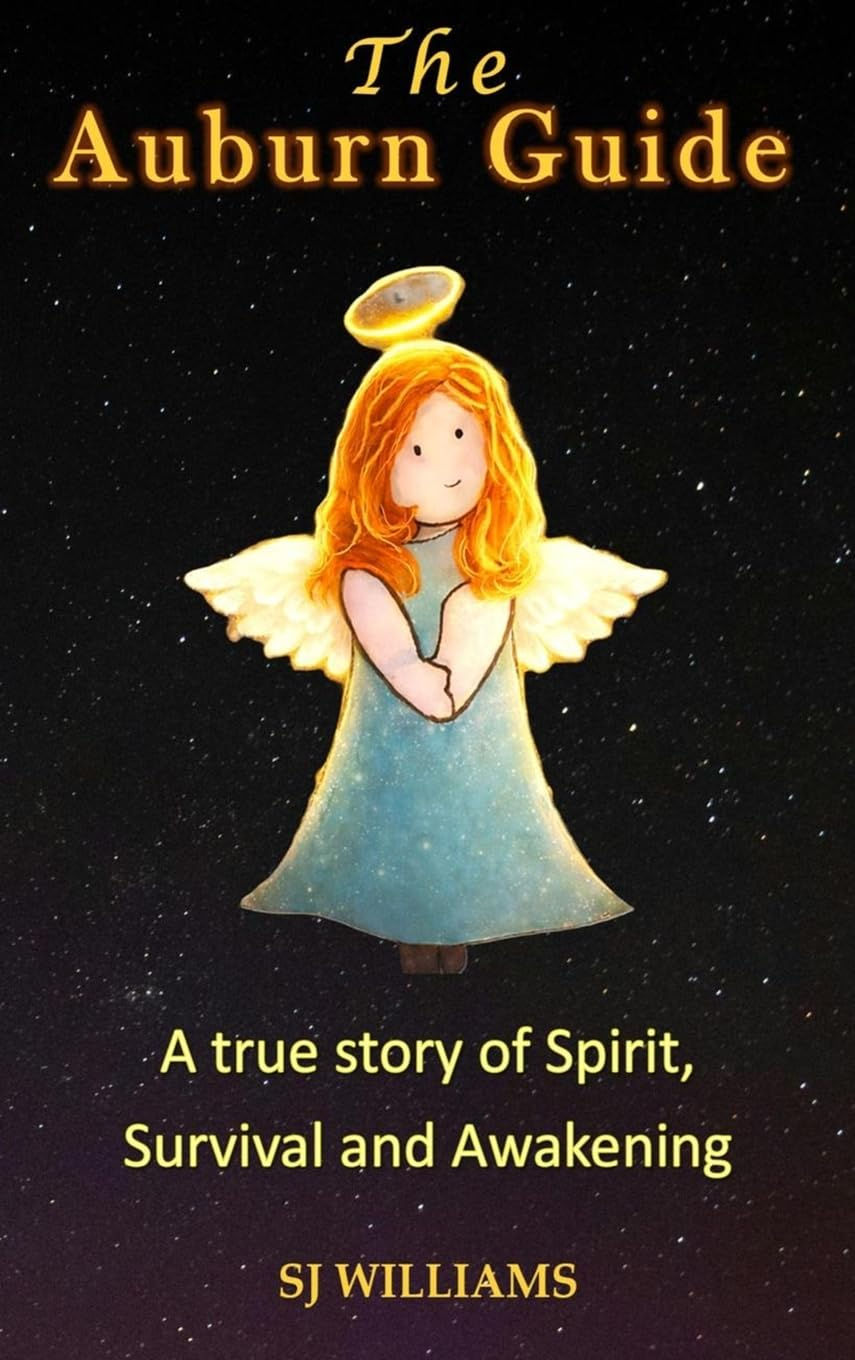
The Auburn Guide delivers eighteen chapters with each featuring a narrative section, then a monologue piece, before linking to an exercise relevant to the chapter.
It starts with My First Memories and has an opening that is undeniably powerful, and it establishes the book’s emotional landscape with immediacy and clarity. A fractured-glass metaphor sets the tone effectively, signalling both trauma and the difficulty of reconstructing memory. The writing is vivid without being gratuitous, and the restraint in the descriptions actually heightens the impact. The shifts between ages feel organic because they follow the emotional logic of memory rather than strict chronology, which suits a trauma-focused guide. The scenes with the vicar and the cousin’s friend are written with control: the sensory details, the pacing of the footsteps, the stillness, and the dissociation are all handled with a survivor-centred lens that avoids sensationalism. The transition into the mother’s violence broadens the scope of harm without overwhelming the reader, and the narrative voice remains steady and reflective rather than reactive.
What stands out most is the clarity of interiority, the way the narrator explains what they understood then versus what they understand now. That dual perspective gives the writing authority and emotional depth. The final lines, where the narrator realises their childhood was not normal only after experiencing healthy love, provide a strong thematic anchor and a natural pivot into the rest of the book. Overall, it’s a compelling, well-crafted opening that balances honesty with narrative control, and it prepares the reader for a story that is difficult but purposeful.
The first monologue deepens the emotional and psychological landscape by shifting from remembered events into the narrator’s internal world, showing how trauma is lived, not just experienced. The voice becomes more reflective and lyrical, capturing the suffocating repetition of abuse and the dissociation that becomes a survival mechanism. The moment of looking to the sky and speaking into the silence is a powerful pivot. It reveals both desperation and the first flicker of agency. The appearance of the glowing figure works symbolically rather than literally, representing the narrator’s need for protection, connection, and meaning in a world where adults have failed them. It introduces the spiritual thread without undermining the realism of the trauma. The eventual cessation of the abuse, paired with the narrator’s later recognition of the figure as Archangel Michael, gives the passage a sense of emotional release and thematic direction: this is not just a recounting of harm, but the beginning of a story about resilience, interpretation, and the search for safety.
The book doesn’t shy away from difficult material, but the focus is always on growth rather than suffering. It isn’t the bleak circumstances that keep coming through the examples that are the focus, it is rather the sense that you can work through what life throws at you and come out the other side. That’s where this has to be seen as a process rather than just a reflective story.
Each chapter introduces new ideas, new issues, new reflections, and new ideas to cope and grow. The chapters are relatively short but that in no way weakens the message. That is truly powerful and the use of the monologues gives the reader the opportunity to consider their own circumstances. Much of what is in each chapter will be present in the lives of readers, perhaps in a different manifestation, but the essence of many of the issues faced will be familiar. It is all a little traumatic with themes of abuse, loss, exploitation by others, health, work and, well, just life.
The opening narratives work well, feeling quite often like a friend telling you their tale, albeit a friend that speaks clearly and with a noted focus. Perhaps more like a person on stage at a talking heads event that has told their story enough times that it is delivered well, but is still not immersed in professional sanitisation. It all feels very real, no doubt because it is.
The monologues then expand the narrative to offer perspective and context, enriching the first part of the chapter. It’s an interesting way to tell the incident from two points. This is all then followed up with a relevant exercise, aimed at those noting elements of their own life in the telling. The exercises are practical without being prescriptive, encouraging reflection rather than offering one-size-fits-all solutions.
It’s not really the sort of book where you pick out a favourite, but I will. Chapter 9, Lessons In Loss And Life, is a story of crisis, redemption through short lived joy, utter crisis and then further joy. It reeks of reality, and should be able to be of use to protagonist and antagonist alike. As well as the lessons of perseverance it tells us, it could also serve those at the other end of the crisis phase well, reminding them that you should ensure you have all the information before making decisions that may affect the lives of others.
This book will resonate most with readers who are navigating their own healing, supporting others, or seeking insight into how trauma shapes adulthood. This is a well-crafted mix of memoir, self-help and life skills. At times it is a tough read, but the chapters play out without lingering so respite does come. But tough it is, because life is often tough. But as the end of the Chapter 9 Monologue says, Life endures. Love endures. I am never alone.
You can find The Auburn Guide HERE.
Find more titles on our Books page HERE.


Comments