


C H Elton - An Interview

Marked By The Devil is the second story in the Micky The Demon series. It follows the fall of CEO Sally as she oversees the demise of an insurance firm, only to find that she has been betrayed by the directors. And then she receives an offer from the Devil, delivered by Micky as the first step of her own descent.
Open Shelf caught up with author C H Elton to find out more.

I don't know about you, but we've certainly been in our fair share of tricky meetings over the years. And it's a always good to see an author take a look at the supernatural from a different perspective. There's no doubt that Sally’s opening chapter feels grounded and painfully real. What inspired her corporate downfall, and why did you begin the story in such an everyday setting before the supernatural arrives?
Sally’s downfall is rooted in reality because that’s where the most unsettling stories often begin. I spent forty years working in the insurance industry, so I’ve seen the personalities, the pressures, and the quiet moral compromises that can build inside corporate structures. While Sally’s situation is fictional, the dynamics behind it; the boardroom politics, the shifting accountability, the way responsibility can be engineered, are drawn from things that feel very real to me.
Also, I wanted her world to feel recognisable before anything supernatural entered the frame. If the reader believes in the system that betrays her, they’ll believe in her reaction to it. The injustice has to feel plausible, not exaggerated. So, starting in that everyday setting also sharpens the contrast when Micky and the Devil appear. The supernatural isn’t replacing reality; it’s colliding with it. Sally is being offered a different way to confront the broken system that destroyed her.
And then in a way, the Devil’s intervention works because the world it steps into is already so morally compromised. The horror isn’t that something unnatural arrives, it’s that it almost feels like a logical next step.
It's certainly something key to anything that touches on the supernatural or fantasy worlds - yes, it can be unnatural or fantastic, but it does need to be believable.
Micky is an unusual take on a demon, calm, sharp, almost understated. How did you develop his personality and his relationship with Sally?
Micky was always intended to disrupt expectations. He’s not too theatrical or overtly sinister. He’s calm, observant, precise, and occasionally witty, which makes him more unsettling. Since he appears in Book 1, I already saw him as someone experienced in guiding people through these “projects.” With Sally, the dynamic shifts slightly because she’s more controlled, more strategic, so he becomes less of a guide and more of a counterpart or working partner. There’s always a tension there; he supports her, but he’s also assessing her, shaping her, and never fully revealing what the devil has in hand.

The Devil in your book is a person with a mission rather than a monster. What drew you to that reinterpretation?
Because this is a series, I wanted the Devil to feel consistent and purposeful rather than purely symbolic. Making this Devil mission-driven allowed me to build a framework where each story explores a different kind of injustice. It’s is not interested in chaos, it’s interested in correction.
I was also drawn to the idea that we only really see the Devil as evil because history tells us that’s the case; and history is usually written by the winners. In that sense, this is partly about perspective. If you shift that lens, the Devil becomes less a force of destruction and more a force of balance.
That opens up moral ambiguity, because while it’s targets deserve scrutiny, the consequences are often extreme. I hope it leaves the reader questioning whether this is justice, revenge, or something more calculated, and whether the distinction even matters.
What struck us when reading was how the different thematic ideas come together. The novel blends corporate thriller, psychological tension, and supernatural elements. How did you balance those genres without losing clarity or momentum?
I treated the corporate world as the foundation in this book, and let everything else build on top of it. The rules of that world, money, power, accountability, they all stay consistent, even when the supernatural enters. Micky and the Devil don’t disrupt that structure; they operate within it. I think that keeps the story grounded and gives the plot a clear through-line, so the tension comes from escalation rather than confusion.
Sally’s journey shifts from survival to revenge to something more ambiguous. How do you see her moral arc, is she transforming, or revealing who she always was?
I see it as both transformation and revelation. She’s growing in confidence as she learns to operate in this new world, but at the same time she’s uncovering parts of herself that were always there, whether that be, her drive, her anger, or her willingness to act. The difference is that now she has the means and permission. So, what starts as survival becomes purpose, but it comes with a cost, and she’s acutely aware of that.
The directors she hunts are scattered across the world. How did you choose the locations and the nature of their new “empires”?
I started with the environments rather than the locations. I wanted each director to be embedded in something shocking but recognisable, i.e. drug trafficking, big game hunting, people smuggling; areas where power and exploitation intersect. Once I had that, I researched those worlds and let the settings emerge naturally from them. And so, the locations aren’t random; they’re places where those activities realistically operate, which helps keep the story grounded despite everything else going on.
The book escalates from realism into something mythic. Was that gradual shift planned from the start, or did it evolve as you wrote?
A bit of both. Like Book 1, it started with a core idea, but the shape of the story evolved as I wrote it and got to know the characters. I knew I wanted that shift, from something very real into something larger and more mythic, but the pace and scale of it developed naturally through the characters and the situations they found themselves in. It’s less about a fixed plan and more about following the logic of the world as it expands and listening to the people that exist in it.
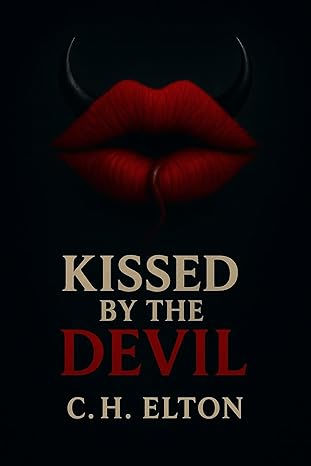
Book 1 in the series - Kissed By The Devil
This is the second book in the Micky the Demon series. How does it build on the first, and what new territory were you excited to explore?
Book 2 expands Micky’s role and shows him operating with more experience and intent, rather than simply introducing him. I was also keen to explore the idea of a female Devil, someone who could stand alongside Sally as a strong, intelligent counterbalance. My hope was that the dynamic added a different kind of tension. Another shift was in the outcomes; not every director meets the same fate, which allowed me to explore consequences in a more varied and realistic way.
Without spoilers, what can readers expect from the next instalment?
The next book broadens the scope. Characters from the earlier stories converge, and the setting moves into a more political space, which opens the door to exploring larger global issues like corruption and imbalance. That said, it stays rooted in the same supernatural framework. The stakes are higher, the world is wider, and there’s a shift toward a bigger, underlying design that’s been building across the series.
As well as looking at the latest instalment, it's always good to get to know the author better. Many of you reading will be authors, whether published or not, so let's take a look at some thoughts about the actual writing.
The prose in this book is clean and direct, almost invisible in the best way. Is that a conscious stylistic choice, or simply your natural voice?
It’s largely my natural voice, and I’ve chosen to trust it. I prefer writing that doesn’t draw attention to itself, so my intention is that the focus stays on the story and the characters. If the prose disappears, I think that the reader might be more immersed, and that’s always the goal.
The pacing is tight, especially in the transitions between corporate tension and supernatural escalation. How do you approach structuring a chapter?
That’s very instinctive as well. I tend to write with a feel for momentum, when to push forward, when to hold back, and when to shift gears. The transitions happen naturally as the story develops, and I start to hear the characters talking to me, and I shape the chapters around that flow rather than forcing a rigid structure.
Sally’s internal voice is blunt, honest, and emotionally grounded. How do you get into her mindset when writing?
I spend time getting to know the characters until they feel real to me. They often join me when I go for a walk for example. Once that happens, it’s almost like a conversation, I can ‘hear’ how they would respond, what they would push back on, where they want to go next. Sally’s voice comes from that. It’s less about forcing it and more about letting her speak naturally within the story.
The supernatural elements are introduced slowly and subtly. What’s your philosophy on revealing world‑building without overwhelming the reader?
It has to build. I think readers engage more when they discover the world gradually rather than having it explained to them upfront. If you layer it in step by step, it feels more believable in my opinion, and it keeps the focus on the story rather than the mechanics behind it.
That's one of the key points here. Too often we see an author dump what is inside their head in the first chapter, or maybe in an overstuffed prologue. It makes for a richer story if that world building to emerge through the book.
How do you keep track of the wider mythology of the series while still making each book feel self‑contained?
Each story is built around a different lead character working alongside Micky, and their motivations are very different. That naturally gives each book its own identity and arc. The wider mythology sits in the background as a constant, but I focus on making sure each character’s journey has a clear beginning, middle, and end, so the story feels complete even as it connects to the wider series.
Did any scenes or characters surprise you during the writing process?
Yes. Mrs Roscoe is a good example. She was only meant to appear briefly in a supporting role, but she developed into something much more influential, with a sense of intrigue around her. Characters like that tend to take on a life of their own as you write them. I’m even considering expanding her role further in the next book, possibly revealing there’s more to her than first appears, but I haven’t fully made a decision on that yet. I’ll let her decide!
Let's now go a bit deeper into some of the themes in the story.
The book suggests that corruption is systemic, not individual. How much of this story is a commentary on real‑world power structures?
I do think some corruption is systemic, not just the result of individual bad actors. The first two books hint at that idea, showing how systems can protect the guilty or shift blame onto the convenient. It’s something I explore more directly in the third book, where the scale widens and those structures come under greater scrutiny.
Sally makes a deal with the Devil, but the Devil’s mission is to “correct” evil rather than create it. What does justice mean in the world of this series?
Justice in this world is meant to feel clean and purposeful, even if the outcomes are harsh. I was interested in the idea that the Devil has been cast as the villain through history, shaped by perspective rather than absolute truth. In the books, justice is about restoring balance and working for the wider good, not just punishment for its own sake, and I think that makes it both compelling, if not at times, uncomfortable.
Gaming nerd moment - When I think of this, I am reminded of alignments in Dungeons and Dragons - devils were normally Lawful Evil.
The line between justice and destruction blurs as Sally gains power. Do you see her as a hero, an anti‑hero, or something more complicated?
She starts in a much darker place and is then driven by revenge and willing to pay almost any cost. Over the course of the book, she begins to evolve into something closer to a hero, although not a traditional one. That progression continues into the next instalment, where her sense of purpose becomes stronger and more defined.
The novel explores the emotional cost of revenge. What do you think drives Sally more, anger, purpose, or the need to reclaim control?
All three, is the easy and obvious answer! She begins as an angry woman who’s lost everything, and that anger drives her initial actions. Through the process, she regains control, and with that comes a sense of power and purpose. By the end, it’s that combination, along with her own strength and determination, that really defines her. She really is a very strong lady.
The story frames evil as something ordinary, embedded in everyday systems. How important was it to contrast supernatural horror with real‑world horror?
I don’t really see it as a classic horror story; I believe that it’s more of a supernatural thriller. The real-world elements were important because they ground everything in something recognisable. I wanted to humanise the Devil and the demons as much as I could without losing what they are, so the contrast isn’t about fear as much as it is about perspective. And generally, the unsettling part is that the real-world “horror” often feels more familiar than the supernatural.
In many ways that's the trick here - the best horror often doesn't have a monster, it has a presence. And in this story the evil is in the reality as much as it is anywhere supernatural.
The Devil’s gender shift is striking. What does making the Devil a woman allow you to explore that a traditional portrayal wouldn’t?
It shifts the perspective. A female Devil brings a different kind of presence. I believe one that is less overtly aggressive, perhaps more measured and balanced. That allowed me to explore control, intelligence, and purpose in a more understated way, rather than relying on the more traditional, forceful portrayal. It makes her feel less like a symbol and more like a strategist.
And to close…
When was the last time you found yourself in a boardroom with that kind of tension in the air?
After forty years in the insurance industry, fifteen of those at senior level, I’ve seen my fair share of boardrooms at both extremes. Tension, silence, the occasional eruption… it all comes with the territory. I couldn’t point to one specific meeting, but I’d say there were a few moments over the years where the atmosphere felt very similar to the book. Looking back, I wouldn’t completely rule out the possibility that the Devil was sitting quietly in the corner at one or two of them.
Thanks to C H Elton for joining us to discuss Masked By The Devil.
You can read more about C H Elton and his work HERE.


Comments