


S J Williams - An Interview

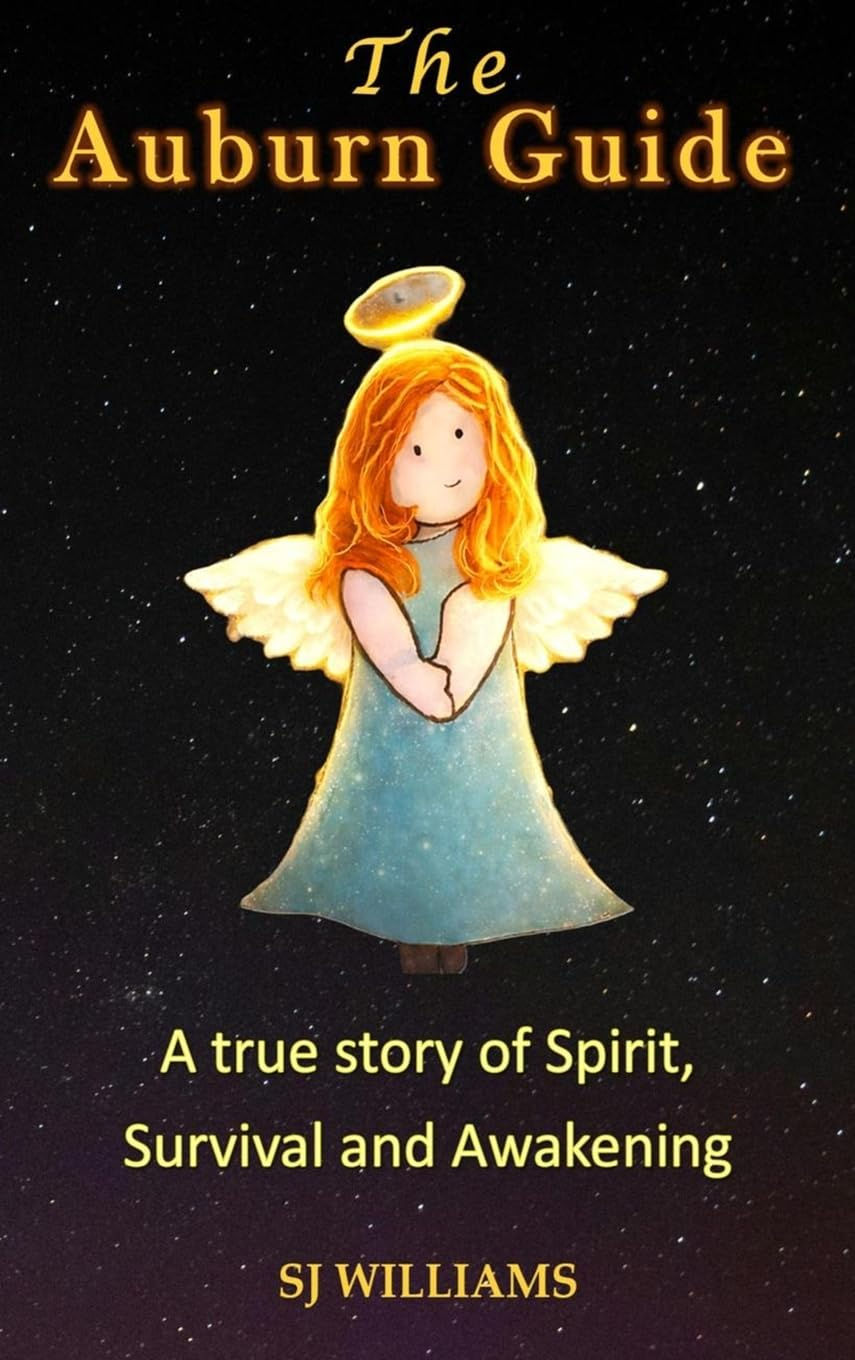
We recently reviewed The Auburn Guide by S J Williams and you can find the book HERE.
Open Shelf caught up with author S J Williams to find out more.

Let's get started by looking at some of the writing processes. Your opening chapters are written with remarkable clarity and restraint. How did you approach writing about trauma in a way that felt honest but not overwhelming?
My goal was never to shock the reader. Trauma is powerful enough without embellishment. I wanted to tell the truth of what happened while focusing on the emotional reality of the experience rather than graphic detail. By writing with honesty and restraint, I hoped readers could connect with the story without feeling overwhelmed by it.
The book moves between memories, monologues, and reflective exercises. How did you decide on this three-part chapter structure?
The structure evolved naturally. The memoir tells the story of what happened, the monologues give voice to the emotional and spiritual truths beneath those experiences, and the exercises invite readers to reflect on their own lives. Together they create a journey that moves from observation to reflection to personal exploration.
The shifts in age and memory feel organic. Was this a deliberate stylistic choice, or did the structure emerge naturally as you wrote?
A little of both. Memory is rarely linear, especially when trauma is involved. I wanted the book to feel like memory itself - moving between moments, emotions, and understanding. The structure became more refined through editing, but the natural flow was always there.
It certainly has a very natural flow. How did you balance being emotionally truthful with maintaining narrative control?
I wrote the first drafts from the heart and edited with the head. The emotional truth had to come first, but I also wanted readers to feel guided through the story rather than lost within it. Finding that balance was one of the most important parts of the writing process.
Were there sections that were particularly difficult to write, and how did you navigate them?
Yes. Some chapters required me to revisit experiences I had spent years trying to understand. When that happened, I allowed myself to step away when needed. I never forced the process. The book took twelve years to complete, and part of that time was learning when to write and when to rest.
Let's now take a closer look at some specifics. Chapter 1 particularly captures the difference between what you understood as a child and what you understand now. How did you access and articulate those two perspectives?
I tried to honour both versions of myself. The child experienced events without the context or language to understand them. The adult can see the bigger picture. Writing from both perspectives allowed me to explore not only what happened but how meaning changes over time.
Dissociation and survival mechanisms are described with striking clarity. How did you find the language to express experiences that are often wordless?
That was one of the greatest challenges. Many of those experiences exist more as sensations than memories. I focused on describing what they felt like physically and emotionally rather than trying to explain them intellectually. In many ways, the body remembers what words cannot.
Many readers will recognise parts of their own lives in your story. What do you hope they take away from the more painful chapters?
I hope they understand that survival is not weakness. Many of the coping mechanisms we develop are acts of protection. Most importantly, I hope readers see that difficult experiences do not have to define the rest of their lives. Healing and transformation remain possible.
How did writing this book contribute to your own healing, if at all?
Writing helped me make sense of experiences that once felt fragmented. It allowed me to step back and see the threads connecting different periods of my life. More than anything, it showed me how much growth had occurred without me fully realising it.
There is, for me, a spiritual thread. The appearance of the glowing figure, later recognised as Archangel Michael, is a pivotal moment. How do you interpret that experience now?
I understand that some readers may interpret the experience differently, and that is perfectly fine. For me, it was a moment of protection, reassurance, and connection. Whether viewed spiritually, symbolically, or psychologically, it remains one of the most significant experiences of my life.
Spirituality is woven through the book without overshadowing the realism of the trauma. How did you find that balance?
The trauma happened. The spirituality happened too. Neither cancels out the other. I never wanted the spiritual experiences to explain away the pain. Instead, they became part of the larger story of how I survived, healed, and found meaning.
That's a very interesting idea, that the trauma and spirituality are part of the whole rather than being mutually exclusive. For readers who may be unsure about spirituality, what would you want them to understand about the role it plays in your story?
The book is not about convincing anyone what to believe. It is simply an honest account of my experiences. At its heart, spirituality represents connection, intuition, hope, and meaning. Readers can engage with those ideas regardless of their personal beliefs.
Moving onto the monologues, they add a lyrical, internal dimension to each chapter. What inspired you to include them?
The monologues emerged as a way of expressing what could not always be captured through narrative alone. They gave voice to emotions, insights, and truths that existed beneath the surface of events.
Do the monologues represent your inner voice at the time, your voice now, or a blend of both?
They are very much a blend. Some reflect the emotional reality of the moment, while others carry the perspective that only comes with time and reflection.
How do you hope readers use the monologues when reflecting on their own experiences?
I hope they pause with them. The monologues are invitations to feel rather than analyse. Sometimes a single sentence can resonate more deeply than an entire chapter.
And now the third part, the exercises. They are gentle, reflective, and intentionally non-prescriptive. How did you design them to support readers without overwhelming them?
I wanted the exercises to feel accessible. Readers are at different stages of healing and awakening, and not everyone wants an intensive process. The exercises are invitations rather than instructions.
What role do you see these exercises playing in a reader's healing or spiritual awakening?
They provide opportunities for self-reflection and self-discovery. The real answers come from within the reader. The exercises simply create space for those answers to emerge.
Were any exercises drawn from your own practices or therapeutic experiences?
Many were inspired by practices that have supported me throughout my own journey, including mindfulness, reflection, spiritual development, and intuitive exploration.
As we draw to a close, let's now look at some of the larger themes in the book. The Auburn Guide is unflinching in its honesty but ultimately hopeful. How important was it for you to show not just suffering, but transformation?
It was essential. Pain is part of the story, but it is not the whole story. I wanted readers to see that growth can emerge from even the most difficult experiences.
Chapter 9 is especially powerful, dealing with loss, crisis, and renewal. What made you choose to include that story, and what do you hope readers learn from it?
That chapter represents one of the clearest examples of how life's greatest challenges can also become catalysts for change. I hope readers see that even in moments of profound loss, new beginnings remain possible.
You write about intuition, inner knowing, and spiritual nudges. How did these develop for you over time?
Like any relationship, trust develops gradually. The more I paid attention to those subtle nudges, the more I recognised their presence. What began as curiosity eventually became trust.
And what about the readers? Who did you imagine you were writing this book for?
For anyone who has ever felt lost, broken, disconnected, or alone. For anyone searching for meaning in difficult experiences. And for anyone curious about the possibility that there may be more to life than we can immediately see.
What do you hope readers feel when they finish the final chapter?
I hope they feel hopeful, empowered, and a little less alone.
If a reader takes only one message from The Auburn Guide, what would you want it to be?
That the experiences which seem to break us can also become the experiences that awaken us.
To close, how has writing this book changed you?
It taught me patience, resilience, and trust. It also helped me recognise that sharing our stories can be an act of service as well as healing.
What surprised you most during the writing process?
How many connections I could only see once I stepped back and viewed my life as a whole. Events that once seemed unrelated formed a much larger pattern.
Do you see The Auburn Guide as the beginning of a larger body of work, or does it stand alone?
It stands on its own, but I believe the conversations it begins will continue. There are many aspects of spirituality, intuition, and personal transformation still left to explore.
What would you say to someone who is at the beginning of their own healing or awakening journey?
Be gentle with yourself. Healing is not linear, and awakening rarely happens all at once. Trust your own pace. You do not need to have all the answers today. Sometimes the next step is enough.
Thanks to S J Williams for joining us to discuss The Auburn Guide and more!
You can read more about S J Williams and her work HERE.


Comments